
Roof Heat Insulation Material: How to Reduce Heat from Factory & Tin Shed Roof
You’ve installed fans. Maybe even a full air conditioning system. But the moment summer hits, your factory floor is still a furnace workers are uncomfortable, productivity drops, and your electricity bill keeps climbing. Sound familiar? The real solution lies in choosing the right roof heat insulation material.
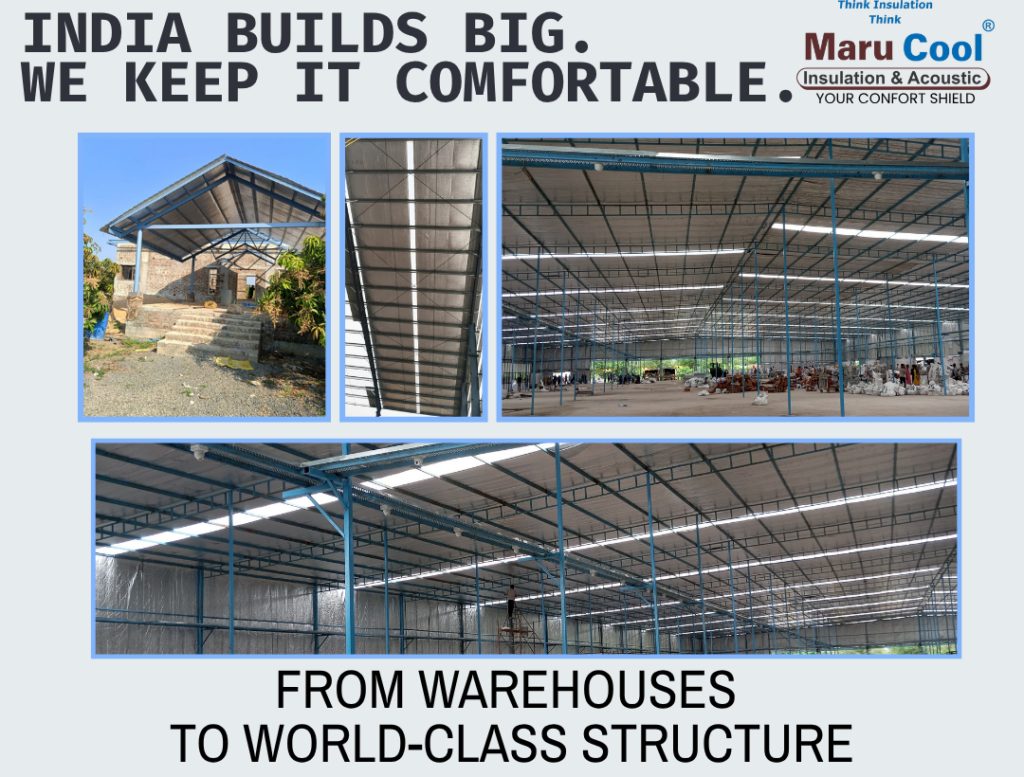
If your roof is absorbing and radiating heat directly into your workspace, no amount of cooling will keep up. You’re essentially trying to cool a room with the oven door wide open.
The root cause, in most Indian factories and warehouses, is the roof itself specifically uninsulated metal or tin shed roofs that bake under the sun all day and radiate that heat downward for hours.
Is Your Metal Roof Causing the Heat Problem?
Metal and tin roofing is the go-to choice for factories, warehouses, and industrial sheds across India it’s affordable, fast to install, and durable. But it has one serious drawback: metal is a highly efficient heat conductor.
When sunlight hits a bare GI sheet or colour-coated metal roof, the surface absorbs solar radiation and heats up fast. That heat then conducts through the sheet and radiates downward into your workspace. Unlike concrete or brick, there’s no thermal mass to slow it down.
The result? Indoor temperatures can run 8–15°C higher than outside air temperature during peak summer hours. For workers, that’s the difference between manageable and dangerous. For productivity and equipment, it’s a constant drain.
How Heat Enters Through Your Roof (Radiant Heat)
There are three ways heat moves, conduction, convection, and radiation. In industrial roofing, radiant heat is the biggest villain, and it’s the one most people don’t account for.
Radiant heat travels as infrared energy, it doesn’t need air or direct contact. The hot metal roof above you is literally beaming heat downward onto every surface, machine, and person in your facility. Ventilation can move warm air out, but it can’t stop radiant energy coming from directly above.
This is why a good reflective heat insulation material makes such a difference. Instead of absorbing that radiant energy and re-emitting it downward, a reflective layer bounces it back before it ever enters your space.
Which Insulation Material Is Best for Your Roof?
There are several options available in the market. Each has its strengths, and the right choice depends on your specific situation roof type, budget, temperature targets, and whether moisture is also a concern.
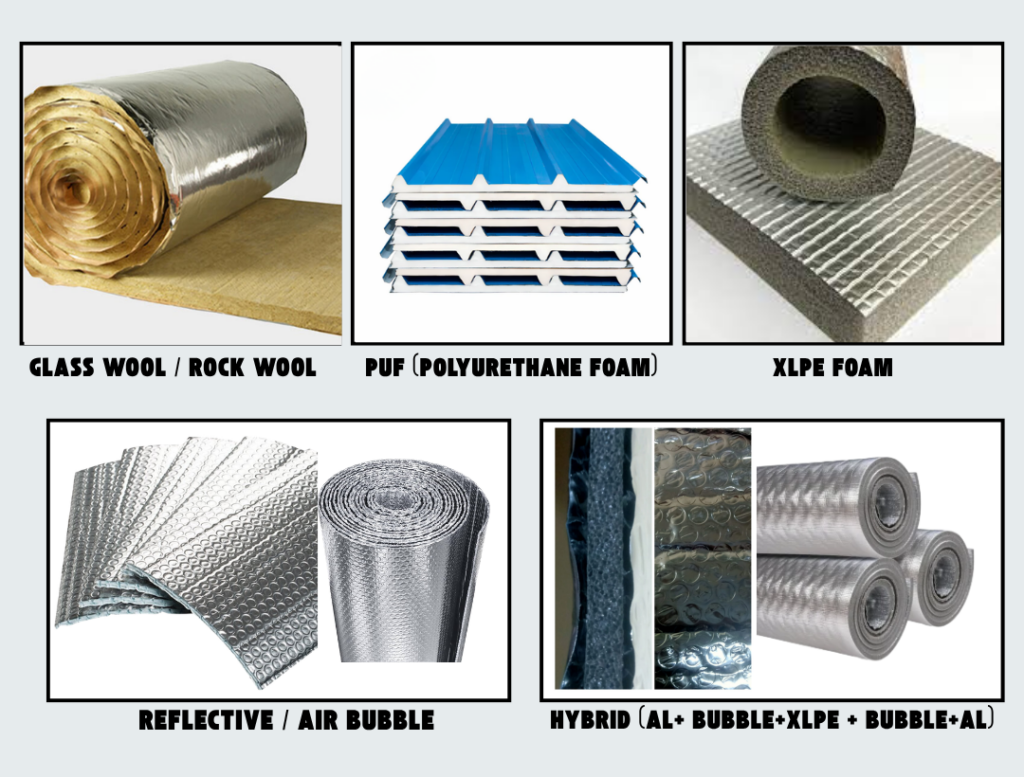
| Material | Best For | Heat Reduction | Moisture Resistance | Lifespan |
|---|---|---|---|---|
| Glass Wool / Rock Wool | New constructions, flat roofs | Moderate | Low (absorbs moisture) | 10–15 years |
| PUF (Polyurethane Foam) | Cold storage, AC spaces | High | Good | 15–20 years |
| Reflective / Air Bubble | Metal & tin shed roofs | Very High (Radiant Heat) | Excellent | 15–20 years |
| XLPE Foam | Industrial sheds, warehouses | High | Excellent | 20+ years |
| Hybrid (XLPE + Reflective) | Extreme heat & moisture environments | Maximum | Excellent | 20+ years |
For most factory and warehouse owners dealing with metal or tin shed roofs, reflective or XLPE-based insulation delivers the best combination of heat reduction, durability, and value. Glass wool and rock wool work well in certain applications but can deteriorate when exposed to humidity a real concern in coastal and high-rainfall regions of India.
Recommended Insulation Solutions for Industrial Use
Based on decades of work with factories, warehouses, and industrial sheds across India, here are the three insulation systems that consistently deliver results for metal roofing:
Air Bubble Insulation
Lightweight, easy to install, excellent reflective performance. Ideal for quick retrofits on existing tin or GI sheet roofs.
XLPE Foam Insulation
Cross-linked foam provides both thermal and acoustic insulation. Long-lasting, moisture-proof, and suitable for high-humidity environments.
Hybrid Insulation
Combines XLPE foam with reflective layers for maximum performance recommended for extreme heat zones or facilities with both heat and condensation issues.
All three are designed to be installed directly under or over the metal sheet, with minimal disruption to your operations. They’re also lightweight enough that they don’t add meaningful load to your roof structure.
How Insulation Helps Reduce Roof Heat & Cooling Cost
The benefits of proper roof insulation go well beyond just “feeling cooler.” Here’s what factory and warehouse owners typically experience after installation:
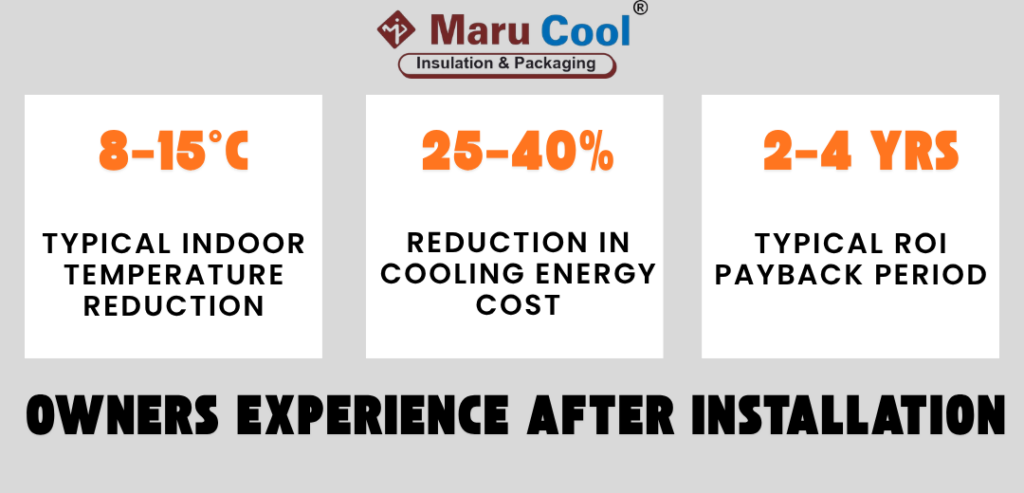
For facilities already running coolers or ACs, insulation means your existing equipment works less hard to achieve the same temperature which translates directly to lower monthly electricity bills and extended equipment life.
How to Prevent Roof Sweating & Moisture Issues
In coastal states, high-humidity regions, or cold storage facilities, roof sweating (condensation) is a serious and often overlooked problem. When warm humid air contacts a cold metal roof surface, moisture condenses leading to dripping water, rust, mold, and damage to stored goods.
Standard insulation materials like glass wool actually make this worse in many cases — they absorb moisture and hold it against the metal surface, accelerating corrosion.
The right solution here is anti-condensation insulation specifically, closed-cell materials like XLPE foam or hybrid insulation that act as both a thermal barrier and a moisture barrier. These materials don’t absorb water, don’t promote mold, and create a dry barrier between the warm interior air and the cold metal roof.
- XLPE and Hybrid Foam are fully moisture-resistant due to their closed-cell structure
- No water absorption means no rust formation or acceleration on metal sheets
- Prevents dripping condensation on goods, machinery, and workers
- Highly critical for pharmaceutical, food, and cold-chain warehouses
Why Choose a Long-Lasting Insulation Solution?
In industrial settings, insulation isn’t something you want to replace every few years. Every replacement means downtime, labour costs, and operational disruption. That’s why material quality and durability matter as much as initial performance.
Low-quality insulation or materials not designed for industrial environments can sag, compress, absorb moisture, or simply degrade under the heat and humidity cycles of an Indian summer. Once that happens, you lose most of the thermal performance you paid for.
What to look for in a long-lasting solution: closed-cell structure (no moisture absorption), UV-stable outer facing if exposed, rated for temperatures above 60°C surface exposure, and a manufacturer with proven industrial track record.
A quality industrial insulation system, properly installed, should deliver consistent performance for 15–20+ years with zero maintenance making it one of the best ROI investments for any factory or warehouse facility.
Frequently Asked Questions
The most effective way to reduce heat from a tin shed roof is to install a reflective or XLPE foam insulation directly beneath the metal sheet. This creates a barrier that reflects radiant heat back out before it enters your space, and adds a thermal buffer against conducted heat. Reflective air bubble insulation is popular for quick retrofits; XLPE foam or hybrid systems are better for long-term industrial use.
For most Indian factories with metal or GI sheet roofing, XLPE foam insulation or a hybrid reflective-foam system delivers the best combination of heat reduction, moisture resistance, and long lifespan. If budget is a primary concern, air bubble insulation is a cost-effective starting point with good radiant heat performance. Glass wool is suitable for some applications but is not recommended where humidity or moisture exposure is likely.
Yes, significantly. By reducing the heat load entering through the roof, insulation means your cooling systems fans, coolers, or ACs need to work less hard to maintain comfortable temperatures. Factories typically report 25–40% reductions in cooling-related electricity consumption after insulation installation. The exact savings depend on your facility size, existing cooling setup, and the insulation system chosen.
Roof sweating happens when warm humid air meets the cold metal surface and moisture condenses. The solution is anti-condensation insulation specifically closed-cell materials like XLPE foam or hybrid insulation. These create a warm, dry barrier on the underside of the metal sheet, preventing the temperature drop that causes condensation. Unlike glass wool, closed-cell materials don’t absorb moisture and won’t hold dampness against the metal, so they also prevent the rust that often accompanies sweating roofs.