
INDUSTRIAL THERMAL INSULATION
XLPE Foam Insulation Sheets for Industrial Roofs, HVAC and Thermal Applications
MaruCool XLPE Foam Insulation is a lightweight, closed-cell insulation solution designed to help reduce heat transfer, manage condensation and support reliable thermal performance across industrial roofing, metal structures, HVAC ducts and temperature-sensitive applications.
- Closed-cell foam construction
- Plain and foil-faced configurations
- Suitable for industrial and commercial applications
- Multiple thickness and facing options
MARUCOOL XLPE INSULATION
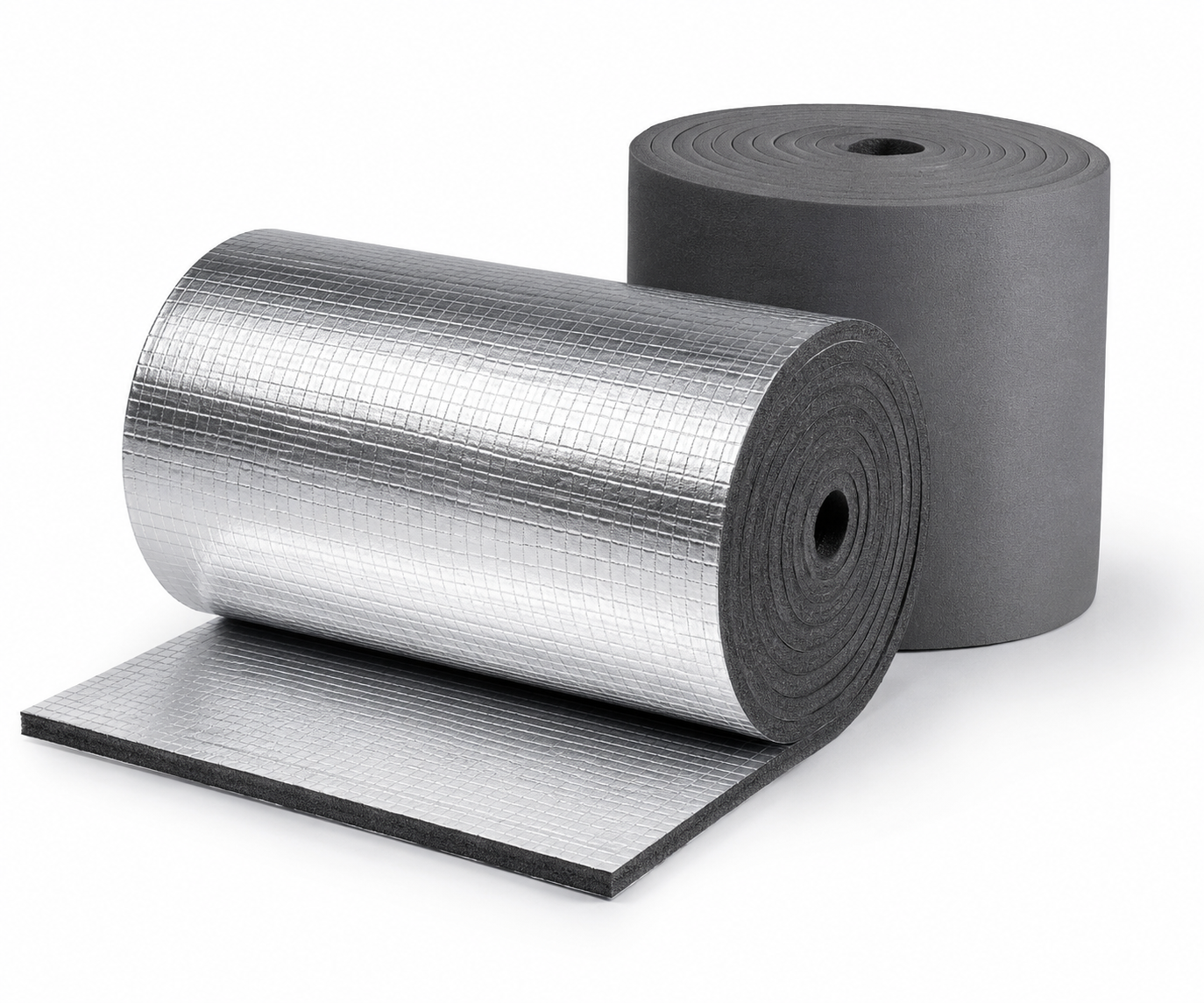
Construction
Closed-cell polyethylene foam
Options
Plain and foil-faced
Applications
Roofing, HVAC and industrial use
Available configurations: Plain XLPE • Aluminium Foil Faced • Metallised Film Faced
QUICK PRODUCT SUMMARY
XLPE Foam Insulation at a Glance
XLPE is a cross-linked, closed-cell polyethylene foam used where a lightweight, flexible and moisture-resistant insulation material is required. It can be supplied as plain foam or combined with reflective facings for roofing, HVAC, ducting and industrial thermal-control applications.
Closed-Cell Structure
The closed-cell construction helps limit moisture absorption and supports consistent insulation performance in demanding environments.
Flexible Configuration
Available in multiple thicknesses and with plain, aluminium foil or metallised facing options depending on project requirements.
Lightweight Installation
The material can be cut, shaped and installed across roofs, ducts, equipment surfaces and other complex building areas.
Industrial Applications
Suitable for factories, warehouses, commercial buildings, HVAC systems, utility areas and selected temperature-controlled facilities.
Note: Final product selection should be based on application conditions, required insulation performance, facing type, fire requirements and installation method.
PERFORMANCE ADVANTAGES
Why Engineers and Contractors Choose XLPE Foam Insulation
XLPE is selected for projects that require a practical balance of thermal performance, low weight, flexibility and resistance to moisture. Its suitability depends on the selected grade, thickness, facing and complete installation assembly.
Closed-Cell Construction
Its cellular structure helps reduce the movement of moisture through the insulation material and supports dependable use in humid or condensation-prone environments.
Thermal Resistance
The foam layer helps reduce conductive heat transfer through roofs, walls, ducts and equipment when correctly selected and installed.
Low Additional Weight
XLPE adds comparatively little load to roofing systems, ducts and supporting structures, making it useful for industrial applications.
Flexible Handling
Sheets and rolls can be cut and shaped around roof profiles, ductwork, pipes, equipment and irregular installation areas.
Condensation Support
Correctly selected XLPE insulation can help reduce surface condensation by controlling temperature differences and limiting vapour movement.
Multiple Facing Options
Plain foam, aluminium foil and metallised film configurations allow the insulation assembly to be adapted to different project requirements.
APPLICATION AREAS
Where XLPE Foam Insulation Performs Best
XLPE can be used across building, roofing and mechanical systems where heat transfer, moisture, surface condensation or limited installation space must be considered.
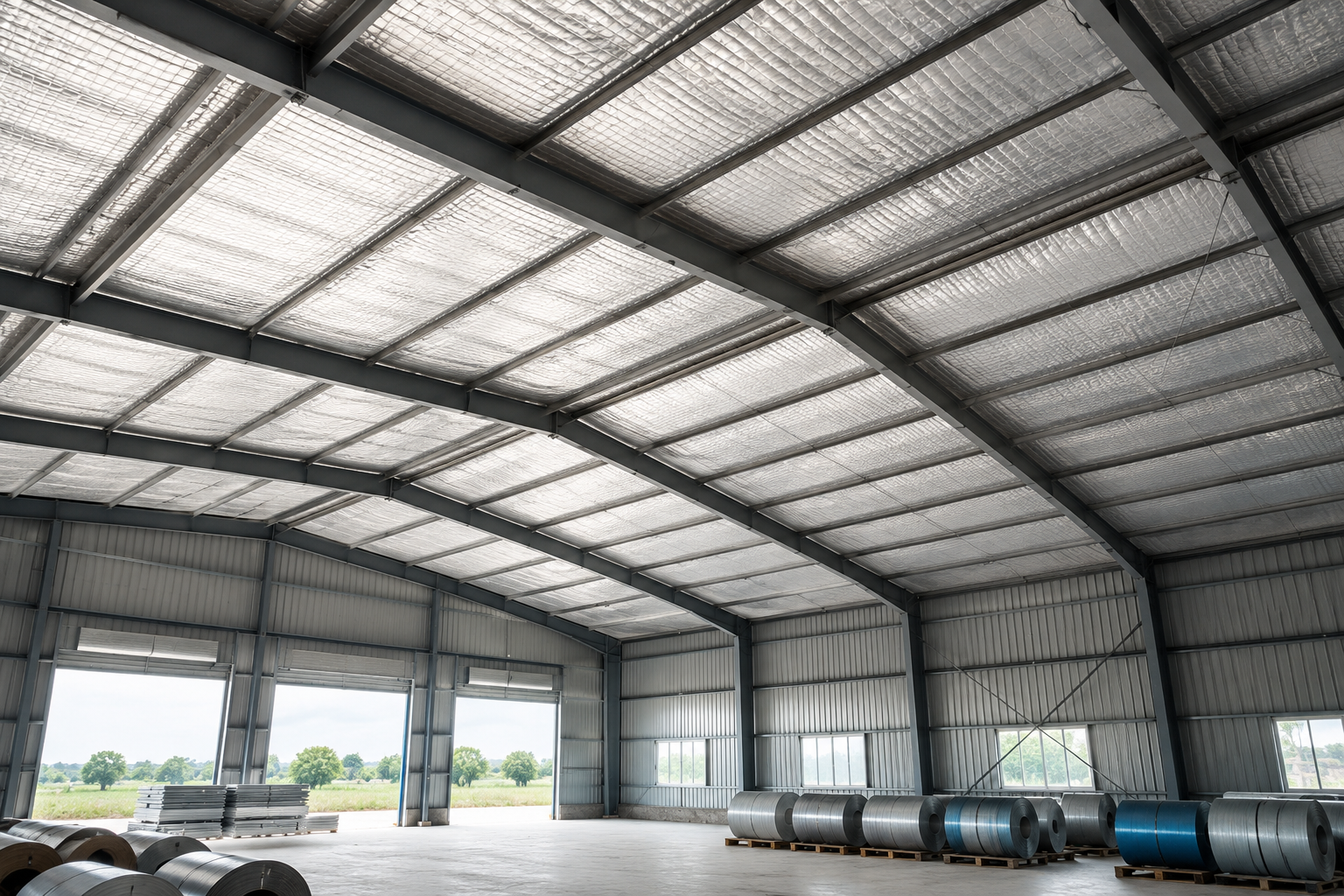
ROOFING
PEB and Metal Roofs
Metal roofs can transfer substantial solar heat into a building. XLPE installed as part of the roofing assembly helps reduce conductive heat transfer and can improve internal thermal conditions.
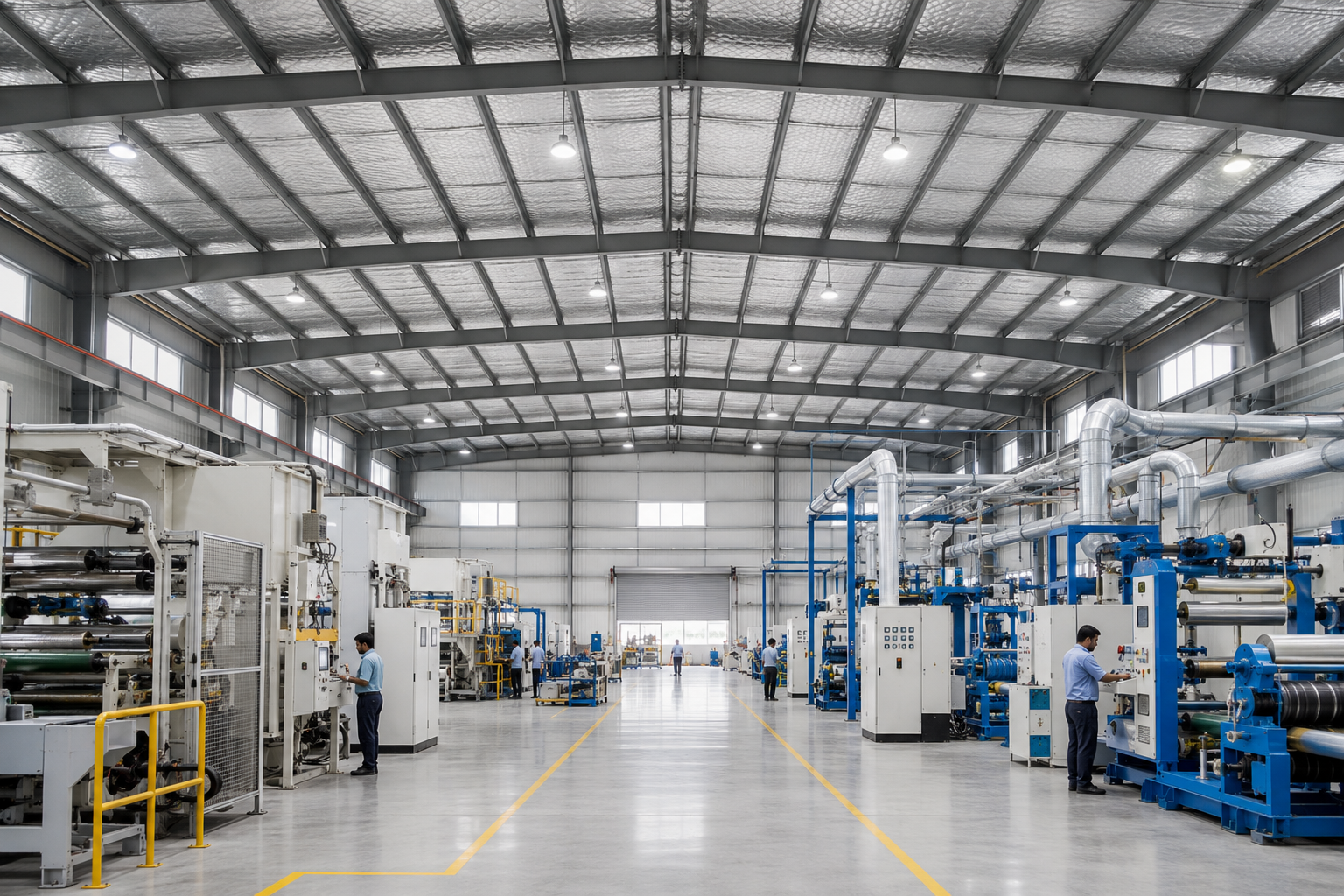
INDUSTRIAL
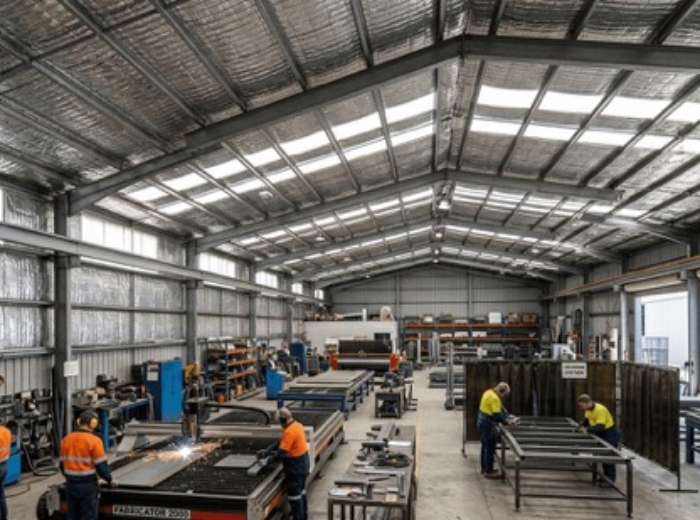
Factories and Manufacturing Units
XLPE can support heat-control requirements in production areas, workshops, process buildings and utility zones where internal temperature affects comfort or operations.

LOGISTICS
Warehouses and Storage Facilities
Roof and wall insulation can help reduce daytime heat gain and support more stable internal conditions for workers, stored materials and temperature-sensitive goods.
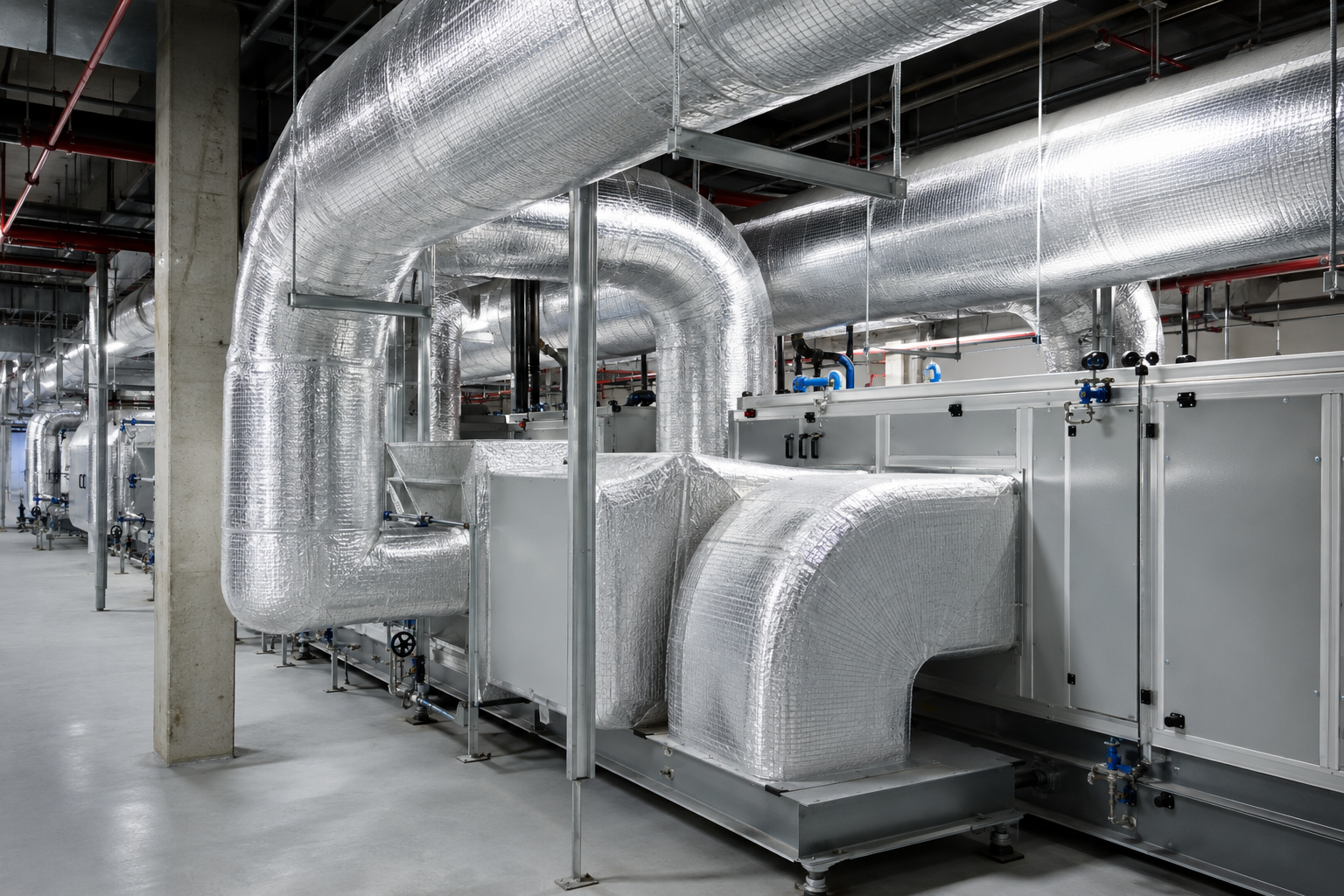
MECHANICAL
HVAC Ducts and Air-Conditioning Systems
Suitable grades of XLPE are used to reduce heat exchange and control condensation around ducts, pipes and mechanical systems, subject to technical and fire requirements.
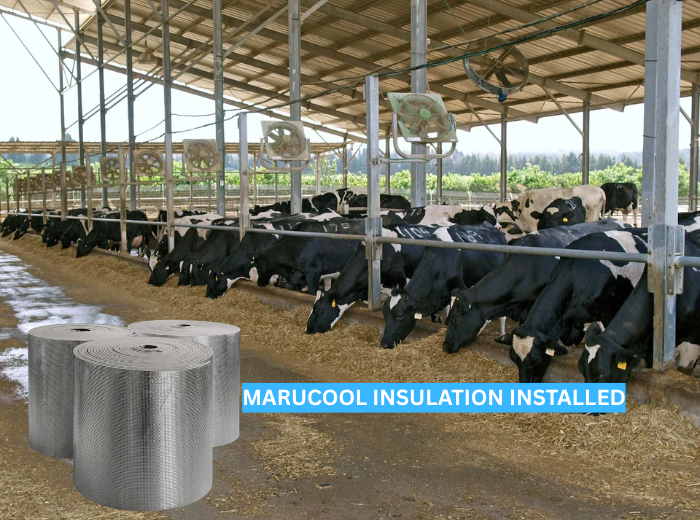
AGRICULTURE
Poultry, Dairy and Farm Structures
Roof insulation can help reduce radiant and conductive heat entering livestock and agricultural buildings, supporting more manageable internal conditions during hot weather.
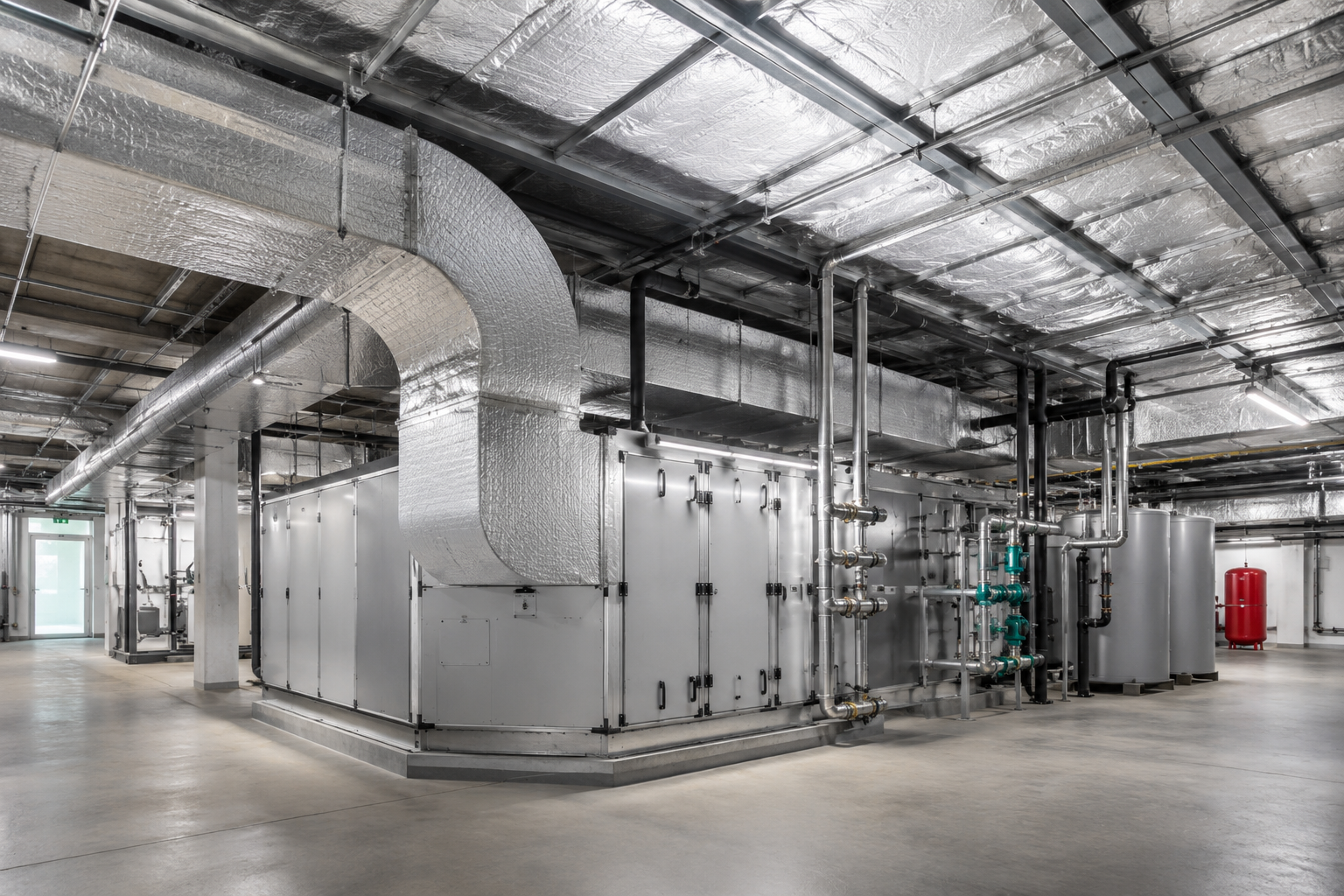
COMMERCIAL
Commercial and Utility Buildings
XLPE may be used in roofs, ceilings, service areas and selected building systems where lightweight thermal insulation and moisture resistance are required.
TECHNICAL INFORMATION
XLPE Foam Insulation Specifications
The exact specification varies according to foam grade, thickness, facing, roll size and project requirement. Refer to the approved MaruCool technical datasheet for final selection.
Material
Cross-linked closed-cell polyethylene foam
Product form
Rolls or sheets, subject to selected grade
Facing options
Plain, aluminium foil and metallised film
Thickness
Multiple options; refer to current product datasheet
Density
Grade-dependent
Thermal conductivity
Refer to tested value for the selected grade
Service temperature
Refer to current technical datasheet
Water absorption
Low due to closed-cell construction; exact value grade-dependent
Fire performance
Only as certified for the selected product grade
Roll width and length
Available according to product configuration
Colour
Product-grade dependent
Typical applications
Roofing, HVAC, ducts, equipment and industrial structures
Installation method
Application and assembly-dependent
Need the exact specification for your project?
Share the application, roof type, required thickness and operating conditions. The MaruCool team can recommend an appropriate product configuration.
PRODUCT CONFIGURATIONS
Choose the Right XLPE Configuration
The facing and construction should be selected according to the thermal objective, installation environment, vapour-control requirement and exposure conditions.
Plain XLPE Foam
Used where the closed-cell foam layer is required without an added reflective facing. Suitable for selected roofing, ducting, equipment and industrial applications.
Single-Side Foil-Faced XLPE
Includes a reflective facing on one side for assemblies requiring an exposed reflective surface, vapour-control support or additional surface protection.
Double-Side Foil-Faced XLPE
Provides facing on both sides where the insulation requires added protection or reflective surfaces on both faces of the assembly.
Metallised Film-Faced XLPE
A reflective-film configuration used for selected insulation and roofing applications where the specified assembly calls for a lightweight facing.
Note: Plain foam, aluminium foil and metallised film are not automatically interchangeable. Product selection must consider the complete assembly.
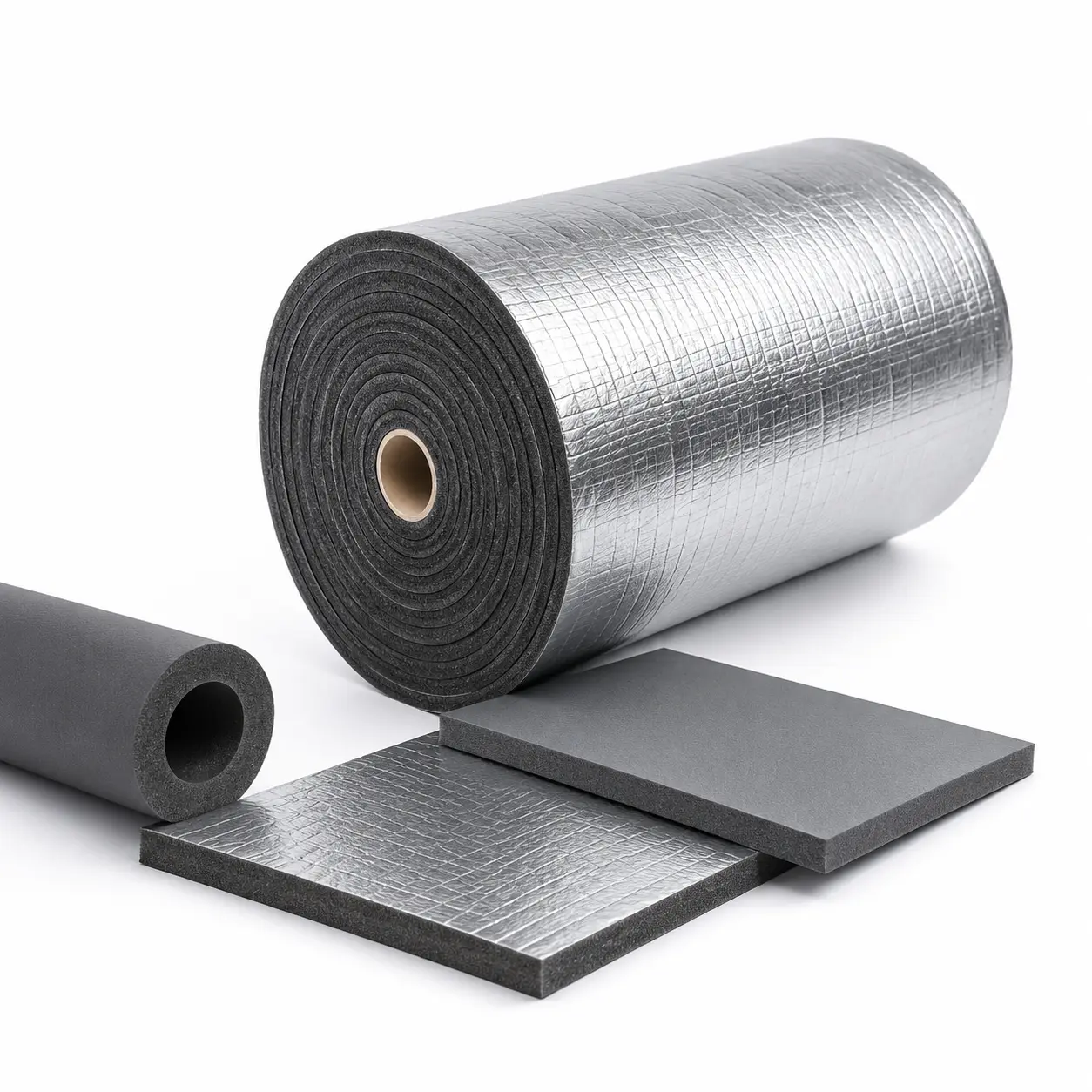
REFLECTIVE FACING
Why Aluminium Foil Facing on XLPE Foam Insulation Makes a Difference
XLPE foam and aluminium foil perform different roles within the insulation assembly. The foam layer primarily helps resist conductive heat transfer, while the low-emissivity foil surface can help reduce radiant heat transfer when it faces a suitable air space.
- Foam provides the primary insulation layer.
- Foil provides a low-emissivity reflective surface.
- Reflective performance depends on orientation and air space.
- Foil can support vapour control and surface protection.
Technical note: Reflective performance figures (for example, specific percentage heat-reflection claims) should only be stated when the exact claim, test method and assembly conditions are supported by a valid report.
PRODUCT SELECTION
How to Select the Right XLPE Thickness
The correct thickness cannot be selected only from a general chart. It should be based on the building assembly, climate, heat exposure, internal temperature requirement and installation conditions.
Roof or wall construction
Local climate and solar exposure
Required internal temperature
Existing cooling or ventilation system
Condensation and vapour risk
Available installation space
Facing and air-gap requirement
Fire and compliance requirements
Information Needed for Recommendation
- Building or application type
- Roof profile and material
- Approximate project area
- New or existing structure
- Current heat or condensation issue
- Preferred thickness, when already specified
- Facing requirement
- City and project location
PRODUCT COMPARISON
XLPE vs Air Bubble vs Hybrid Insulation
Each insulation type works differently. The right choice depends on the roof assembly, available air space, required insulation performance, installation conditions and project budget.
Factor
XLPE Foam
Air Bubble Insulation
Hybrid Insulation
Core construction
Closed-cell foam
Enclosed polyethylene bubble layers
XLPE foam combined with reflective bubble construction
Primary performance
Conductive thermal resistance
Reflective performance when correctly installed
Combination of foam and reflective insulation mechanisms
Profile
Available in multiple thicknesses
Generally lower-profile
Product-specific construction
Moisture behaviour
Low absorption due to closed-cell structure
Moisture-resistant construction
Product-specific
Best suited for
Roofing, HVAC, ducts, equipment and industrial applications
Reflective roof assemblies with suitable air space
Projects requiring combined insulation characteristics
Selection basis
Required thermal resistance, thickness and facing
Air space, facing orientation and roof assembly
Complete project requirement and product design
No single insulation product is universally best for every application. Selection should be based on the complete system rather than only material thickness or price.
MANUFACTURING AND QUALITY
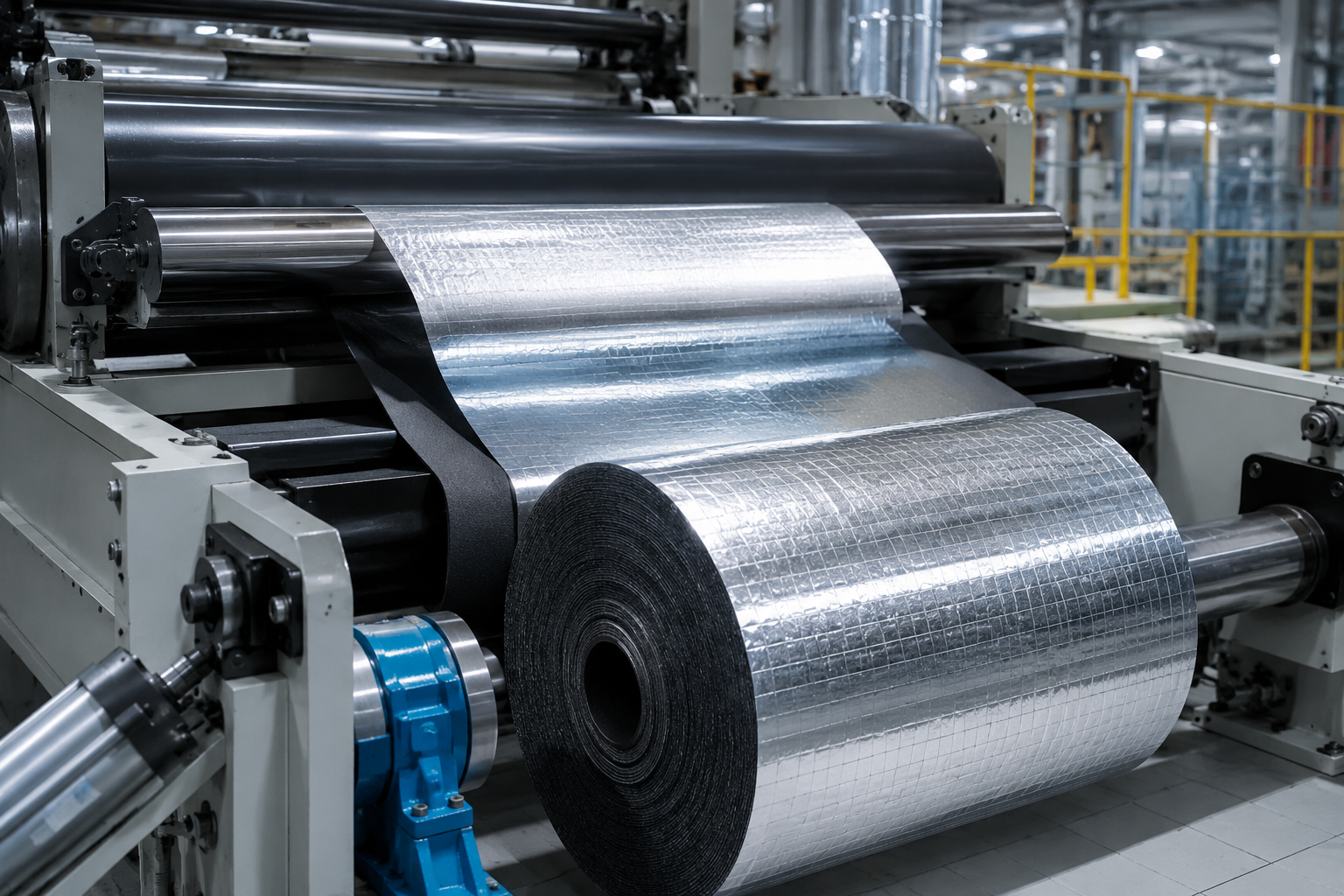
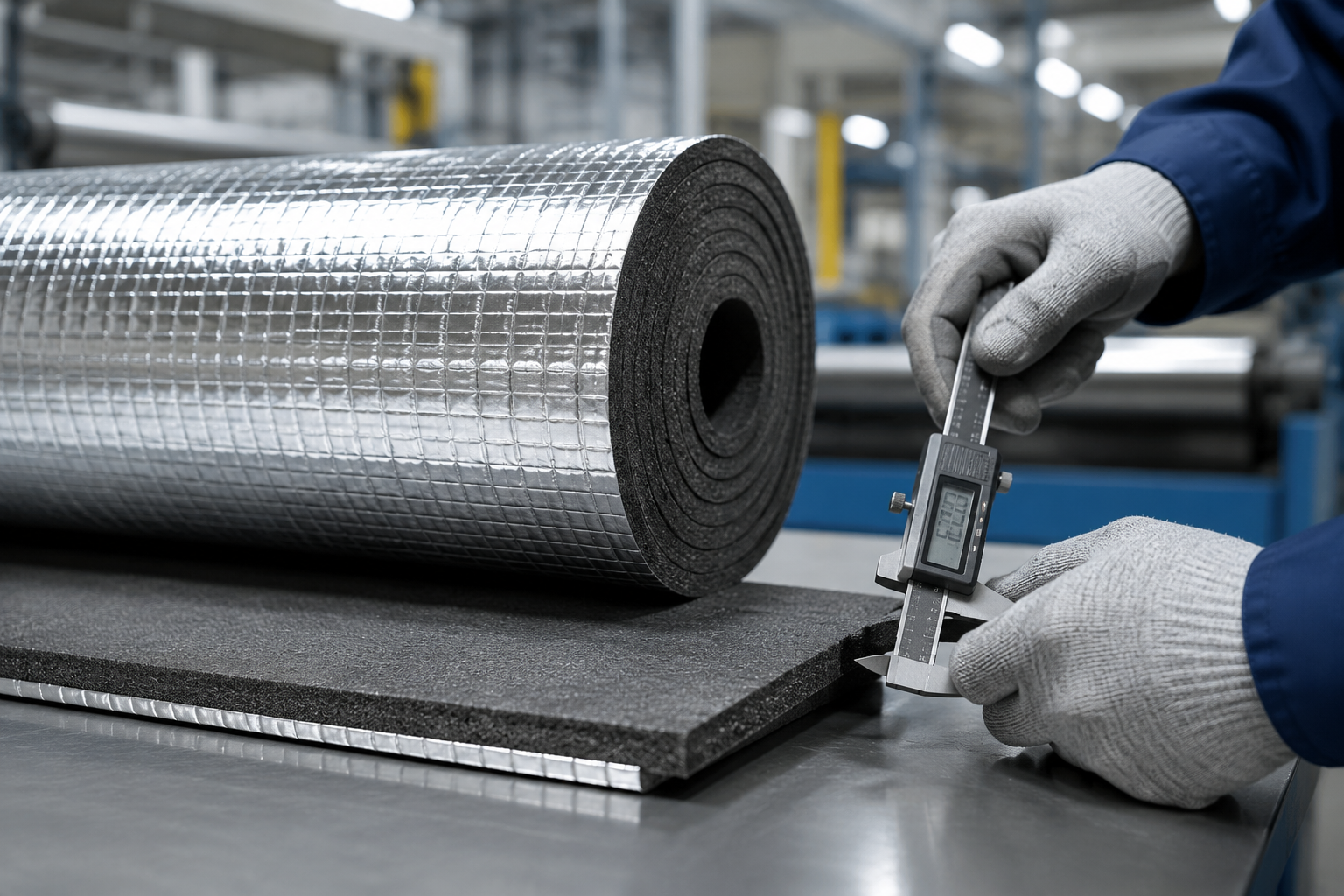
Manufactured for Industrial Project Requirements
Product consistency, material selection, facing quality and dimensional control all influence the performance and installation of XLPE insulation.
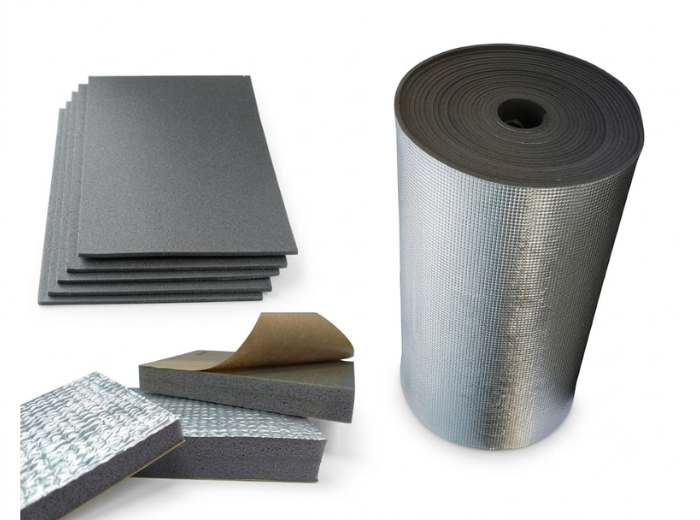
Material and Grade Selection
Product configuration should match the required thickness, density, facing and application conditions.
Dimensional Consistency
Thickness, width and roll dimensions should remain suitable for efficient installation and project planning.
Facing and Lamination Quality
Foil or film facing should be properly bonded and protected to support handling and installation.
Inspection and Dispatch
Product inspection, packaging and dispatch controls help reduce installation issues at the project site.
DOCUMENTATION
Technical Data, Test Reports and Product Documentation
Project consultants, architects, contractors and procurement teams may require product-specific documentation before approval or installation.
Technical Datasheet
Review the current product construction, available variants and technical properties.
Thermal Performance
Request the applicable thermal-conductivity or insulation-performance documentation for the selected grade.
Fire Performance
Fire classification must be verified for the exact product grade and test standard required by the project.
Project Submittal Support
Obtain technical documents required for consultant, architect, contractor or procurement review.
INSTALLATION
XLPE Foam Insulation Installation Overview
The final installation method depends on the roof, duct, surface, facing and project design. The following steps provide a general overview only.
Inspect and clean the installation surface.
Confirm the selected thickness and facing orientation.
Measure and cut the insulation accurately.
Maintain continuity between adjoining sheets or rolls.
Seal joints with suitable tape where the assembly requires it.
Avoid unnecessary compression of the insulation.
Protect the material from sharp edges and physical damage.
Maintain the designed air space where reflective performance is required.
Follow applicable roofing, fire and building requirements.
Technical note: Installation drawings and project specifications should take precedence over this general overview.
AVOID THESE ISSUES
Common XLPE Selection and Installation Mistakes
Selecting on price alone
Selecting thickness only on the basis of price.
Assuming all facings are equal
Treating all foil-faced materials as identical.
Ignoring the air space
Ignoring the air space required for reflective performance.
Untreated joints and edges
Leaving joints, edges and penetrations untreated.
Over-compressing the foam
Compressing the insulation excessively.
Overlooking condensation
Ignoring vapour movement and condensation risk.
Using unverified claims
Using unverified fire or thermal claims.
Expecting insulation to fix ventilation
Expecting insulation alone to correct poor ventilation.
FREQUENTLY ASKED QUESTIONS
Questions About XLPE Foam Insulation
What is XLPE foam insulation?
XLPE is a cross-linked, closed-cell polyethylene foam used to reduce heat transfer and support condensation control across roofing, HVAC, ducting and selected industrial applications.
Is XLPE suitable for metal roofs?
Yes. XLPE can be used as part of a metal-roof insulation assembly, provided the thickness, facing, orientation, fixing method and complete roof construction are correctly selected.
What is the difference between XLPE and air bubble insulation?
XLPE uses a closed-cell foam core. Air bubble insulation uses enclosed polyethylene bubble layers with reflective surfaces. Their performance mechanisms and installation requirements are different.
Is aluminium foil required on every XLPE product?
No. The requirement depends on the application, reflective-performance objective, vapour-control need, exposure conditions and desired surface protection.
Which XLPE thickness should I select?
Thickness should be selected after evaluating the roof or duct construction, climate, required internal conditions, condensation risk, available space and applicable project specifications.
Does XLPE absorb water?
The closed-cell structure generally provides low water absorption. The exact value depends on the selected grade and test method and should be confirmed from the technical datasheet.
Can XLPE be used for HVAC ducts?
Suitable XLPE grades are used for duct and HVAC insulation, subject to thermal, condensation, fire and project-specific requirements.
Is XLPE fireproof?
XLPE should not be described as fireproof. Fire performance depends on the selected product grade and applicable test classification. Always verify the required report before approval.
Can XLPE reduce cooling electricity consumption?
A properly selected insulation system can reduce heat gain or heat loss and may reduce cooling demand. Actual savings depend on the complete building, operating schedule, ventilation and cooling system.
Does foil-faced XLPE require an air gap?
An air space is generally important when the design relies on the low-emissivity reflective properties of the foil surface. Follow the project assembly and installation specification.
PROJECT RESOURCES
Technical Downloads and Support
XLPE Technical Datasheet
Request the latest product-grade and configuration information.
Installation Guidance
Request general installation information for roofing, HVAC or industrial use.
Project Recommendation
Share your requirements for thickness, facing and application guidance.
PROJECT ENQUIRY
Get the Right XLPE Specification for Your Project
Share your application, structure type, approximate project area and current heat or condensation concern. The MaruCool team can help identify a suitable XLPE thickness, facing and product configuration.
- Product selection support
- Technical-document assistance
- Bulk and project enquiries
- Industrial and commercial applications